22 June 2016

"Where Do You Get Your Protein?"

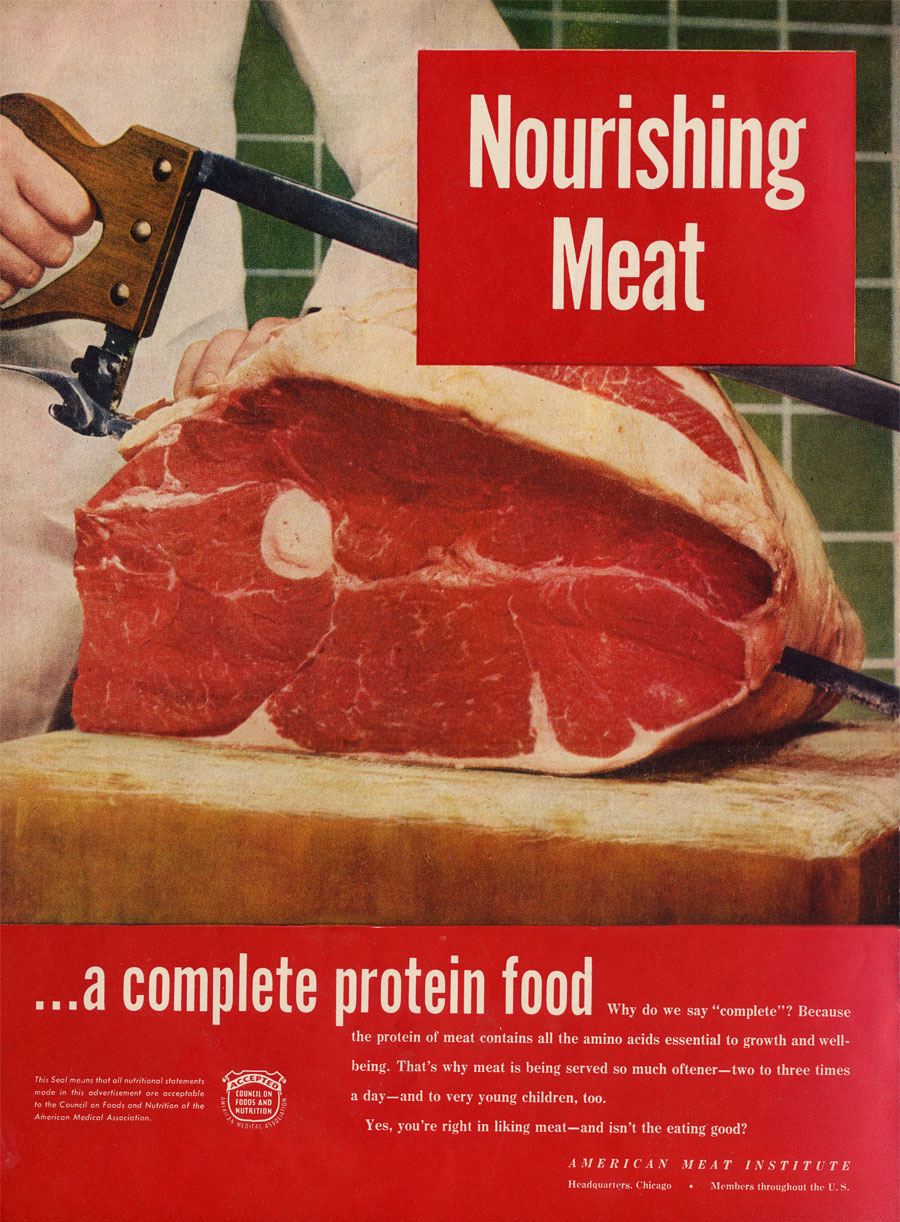
Ads like this have falsely influenced and
harmed generations. In 2015, red meat was 
classified as a class 2A carcinogen by the WHO.
When people find out that I have not eaten meat in nearly 20 years, the most common statement I hear is: "Where do you get your protein!"  The fact that people reflexively ask this question is a testament to the power of marketing and not science.  When most people hear the word "protein" the first thing that comes to mind is meat.  The common belief is that eating the flesh or muscles of an animal is essential for building your own muscles.  Why then do we not associate becoming smarter with eating the brains of animals?  Or building strong bones with eating the bones of animals?  I believe the answer is simple: these products have never been marketed that way.  The meat and fast food industry literally spends billions to promote their products, as there are no independent scientific studies that have proven the need for animal protein in order to be healthy.  The flawed studies that are often quoted promoting animal protein are always funded by the meat industry.  This was a tactic also used successfully by the tobacco industry, while millions of people suffer needlessly.  The following is what independent, unbiased scientific studies tells us about protein:

Firstly, we can be strong without consuming animal protein.  Many athletes have proven this and continue to do so.  In 1991, Olympic sprinter, Carl Lewis, had his "best year as an athlete ever" while consuming a completely plant-based diet.  Ultramarathon runner Scott Jurek has achieved numerous records also without any animal protein for the last 17 years (watch the video at the end of this article to learn more).  One of the strongest men in the world, Patrik Baboumian, hasn't consumed meat in over 10 years, and continues to compete in strong man competitions, while shattering the protein myth.  Heavyweight boxer David Haye came out of retirement, more muscular than ever, and recently knocked out his undefeated opponent, all after adopting a vegan diet more than two years ago (see image below).

Secondly, not consuming meat does not lead to a protein deficiency. A landmark study published in 2013 compared the protein intake of meat eaters, vegetarians, and vegans, and found that all three groups more than exceeded their daily protein requirments.  Moreover, the need for protein in our diet is vastly exaggerated as we don't need that much protein to grow and stay healthy.  For example, human breast milk only contains about 6% protein, which allows us to more than triple our birth weight in the first year of our lives.

Thirdly, protein does not have to be "complete" with every meal.  Another myth driving the perceived need for animal protein is the notion that we need to consume a "complete protein."  All the building blocks to make protein do not have to come from one source at every meal in order for our body's innate intelligence to put everything together.  A well-balanced diet gives you all that you need.

And finally, animal protein is actually unhealthy.  While the meat industry has literally spent billions over the last 60+ years to encourage us to eat meat for health, the science has shown that eating meat may be good for their business, but definitely not for your health.  Studies have linked the consumption of animal protein with the development of a wide range of chronic diseases, including cancer, heart disease, diabetes, rheumatoid arthritis, kidney disease,  multiple sclerosis, and even Alzheimer's.

So where do I get my protein from?  As vegan natural bodybuilder Robert Cheeke says, "... from the same place your protein gets it's protein from."  The plant kingdom has everything we need.  Simply eat as much whole, unrefined, unprocessed veggies as possible, along with fruit, whole grains, legumes, lentils, seeds, and some nuts; and let your body do what is knows best.
-by Dr. Shailen J. Nana


For more information:
This is why you crave beef: Inside secrets of Big Meat’s billion-dollar ad and lobbying campaigns
Meat Industry Advertising
Low Protein Intake Is Associated with a Major Reduction in IGF-1, Cancer, and Overall Mortality in the 65 and Younger but Not Older Population
Professional Vegan Arm Wrestler Proves Plant-Based Diet Can Equal Strength
Raw Vegetarian. Professional Arm Wrestler. Oh, and Also Olympic Bobsledder
Adverse Effects Associated with Protein Intake above the Recommended Dietary Allowance for Adults
BUILD MUSCLE WITH WHOLE FOOD, PLANT-BASED DIET
Do Vegetarians Get Enough Protein?
The Protein Combining Myth
Why is Meat a Risk Factor for Diabetes?
The composition of human milk.
How to Optimize the “Whole” in a Whole Food, Plant-Based Diet

15 June 2016

A Strong Spine Begins With Strong Feet

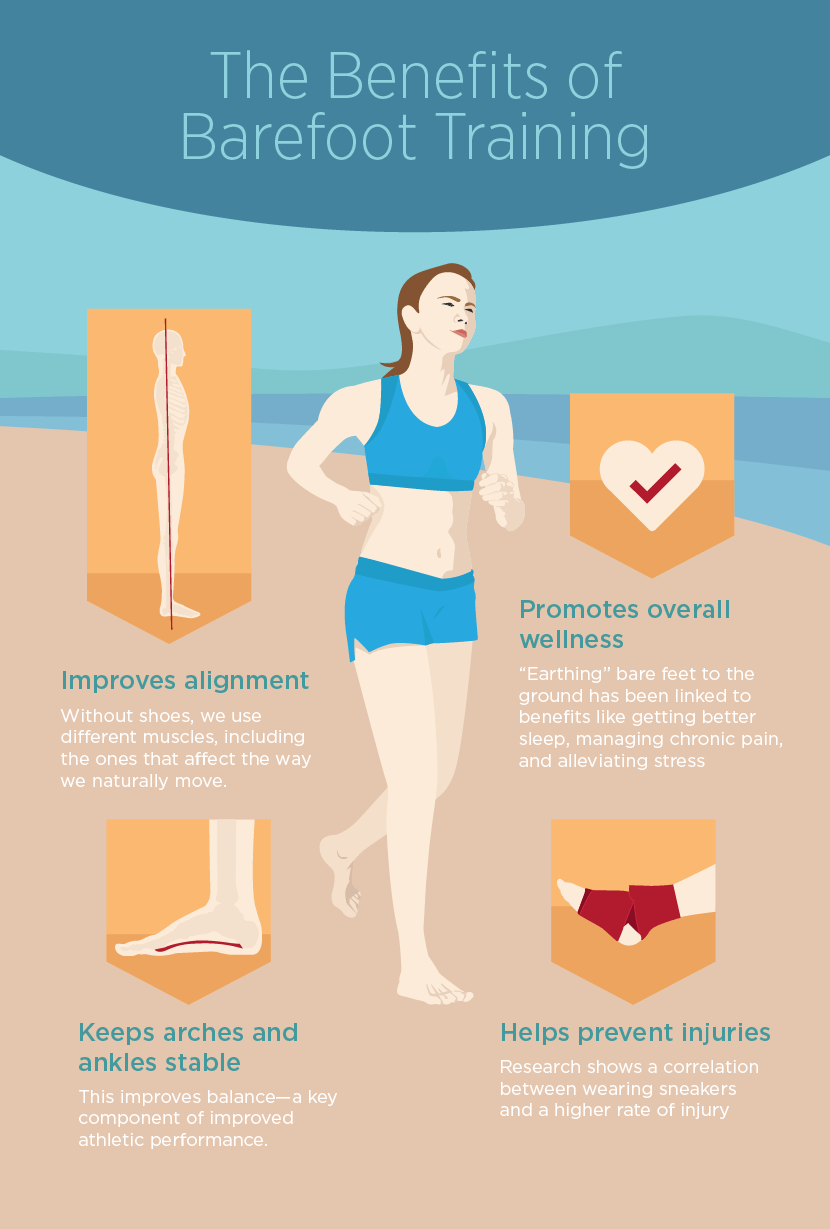
Most people spend nearly an entire lifetime wearing shoes. While this is more practical in modern times, are shoes actually bad for our health? The shoe industry has convinced us that our lives and athletic endeavours are better off while wearing their products, but I believe that we are harming the health of our feet and this has a negative impact on the rest of the body.  To understand the importance of motion in your feet, it's important to remember that when joints, muscles, and bones in your body are under-used, they start to degenerate and atrophy.  This is especially true for joints, which rely on motion to stay healthy, and muscles, which must be challenged to stay strong.  Both feet contain 52 bones in total, making up a quarter of the bones of your entire body.  Adjacent to these bones, are 33 joints and over 100 muscles, tendons, and ligaments, making the feet one of the most complex biomechanical structures in the body.

Another important reason to spend more time barefoot is to stimulate the more than 100,000 nerve endings in each foot.  I believe that this extremely high concentration of nerve receptors serves a greater purpose than simply feeling the ground.  With the recent re-discovery of the importance of Earthing, it has become apparent that we absorb free electrons from the ground, and since our feet touch the ground the most, it only makes sense that the soles of our feet are so densely innervated. Unfortunately, most people imprison their feet in tight-fitting, hard-soled shoes the entire day, which effectively insulates them from the Earth's energy.  In fact, the only time most people spend without shoes is in bed, when their feet are passive and not even touching the ground.


As it has become socially unacceptable in modern society to walk around barefoot, there is one place where you can strengthen your feet, by simply doing as much of your exercise as possible while barefoot.  Many exercise programs require bare feet, such as Pilates, yoga, martial arts, and kettlebell strength training, as engaging the ground with your feet is essential for balance, coordination, and whole-body strength. Bodybuilders have historically appreciated the importance of barefoot training, as part of their quest to build as much muscle as possible.  Once you spend more time barefoot, especially while you exercise, you will also realize the importance.  


For more information:
https://www.fix.com/blog/is-barefoot-training-smart-or-senseless/
http://www.kinectmethod.co.uk/tag/barefoot-lifting/
http://barefootprof.blogspot.co.za/2011/04/foot-anatomy-101-biofeedback.html
http://www.menshealth.com/fitness/10-secrets-perfect-kettlebell-swing/slide/2

11 May 2016

How Cell Phones and WiFi Harm Your Brain

Figure 1: This study definitively demonstrated why children should not be
using cell phones.  While the effect seen on adults is less, the radiation
is still significant enough to limit your exposure.
While the cell phone was invented 43 year ago, it has only been widely used for about 10-15 years. Today, they have become an integral part of modern living. For many people, their lives literally revolve around these devices. The microwave radiation generated by cell phones and WiFi transmitters is supposedly safe, according to government agencies and the telecommunications industry, stating there is no conclusive evidence of health risks, despite warnings which can be found in the device's "Legal Information." In 2011, the World Health Organization, classified cell phone radiation, along with WiFi, as "possibly causes cancer" (See Figure 2 below).  Over 5,000 studies have been published in scientific, peer-reviewed journals, demonstrating the negative biological effects of the electromagnetic fields created by these devices. One effect of extreme concern is on the brain and nervous system.

Figure 2: The World Health Organization classified cell phone radiation as a
Group 2B cancer-causing agent 5 years ago.  This is the same category
as pesticides, lead, and engine exhaust.
As the master controller in your body, the brain is arguably the most important organ.  As a result, nature has provided extra protection, even from your own blood, by what is called the Blood-Brain Barrier.  This protective structure keeps toxins and pathogens from entering the brain, allowing you to function at your best.  Fortunately, this is one of the toughest structures in your body, consisting of high density cells, protecting the brain and the spinal cord.  Alarmingly, studies have shown that man-made electromagnetic fields increases the permeability of the blood-brain barrier, allowing leakage of harmful substances into the brain.

Figure 3: As compared to rats, the human blood-brain barrier 
is sufficiently similar to consider these findings a warning.  
A similar study on humans would likely lead to similar results.  
In 1975, Dr. Allan Frey published a study which demonstrated "that exposure to very weak microwave radiation (as from a cell phone) opens the blood-brain barrier, after exposure for as little as five minutes."  His work has subsequently been replicated by 13 other laboratories, including Swedish neurosurgeon, Dr. Leif Salford, who calls our current overexposure to cell phones and WiFi "the largest biological experiment ever."  Alarmingly, his research also showed that the weaker the radiation, the greater the leakage through the blood-brain barrier. (See Figure 3)  Hundreds of other independent scientists have also publicly condemned the mass overindulgence of cell phones, like Dr. Martin Blank, from Columbia University.  In his insightful and well-referenced book, Overpowered, he warns that "Cell phones generate electromagnetic fields (EMF), and emit electromagnetic radiation.... The many potential negative health effects from EMF exposure (including many cancers and Alzheimer's disease) can take decades to develop. So we won't know the results of this experiment for many years -- possibly decades.  But by then, it may be too late for billions of people."


For more information:
http://www.collective-evolution.com/2016/02/21/this-is-what-wifi-cell-phones-ipads-more-are-doing-to-your-childs-brain-100-scientists-are-now-petitioning-the-un/
http://preventdisease.com/news/12/091812_Neurosurgeon-Shows-How-Low-Levels-of-Radiation-Such-As-Wi-Fi-Smart-Meters-And-Cell-Phones-Cause-The-Blood-Brain-Barrier-To-Leak.shtml
http://www.justproveit.net/content/studies
http://www.the-scientist.com/?articles.view/articleNo/32648/title/Opinion--Cell-Phone-Health-Risk-/
http://www.cellphonetaskforce.org/?page_id=594
http://microwavenews.com/children.adults.html

27 March 2016

The Overlooked Cause of Spinal Degeneration

Figure 1: An illustration of disc degeneration, which
was previously thought to be primarily due to
mechanical factors and aging.
Figure 2: The blood supply to the spine is extensive,
with numerous tiny vessels that get narrowed and
blocked long before the main arteries of the heart.
    Spinal degeneration is assumed to be an inevitable part of aging.  However, many studies have discovered that there are definite lifestyle factors that accelerate the decay of the spine.  While chiropractic care can help to slow this progression by maintaining proper nerve supply, motion, and balance of the spine, the effects are limited.  A sedentary lifestyle is a major factor, as the discs of the spine are dependent on motion and resistance to stay healthy.  Another seldom-mentioned cause is what you eat, which ultimately affects the blood supply to the spine. The blood supply to the various tissues and organs of the body is essential.  Without adequate blood supply, the cells are starved of proper nutrition and slowly wither and die.  The blood supply to the spinal column is especially extensive (see Figure 2) and vital to the health of the vertebrae, muscles, and nerves. Just as arteries in the heart and brain can become hardened and filled with plaques (atherosclerosis), so to does the vast arterial network that feeds the vertebral column.  The resulting decreased blood supply leads to premature degeneration of the vertebrae, which is usually preceded by deterioration of the discs (as seen in Figure 1).  Numerous studies have shown the link between clogged arteries and spinal degeneration (see Figure 3 below).  One study from 2004, for example, found that nearly 80% of patients with back pain had occluded arteries leading to the spine, concluding that "smoking and high blood cholesterol levels were found to have the most consistent associations with degenerative discs and low back pain."  While severe degeneration did not necessarily lead to more pain, it was noted that those with higher levels of cholesterol experienced more nerve pain.  Another study from 1997 found that those "with one or more occluded/narrowed arteries were 8.5 times more likely to have suffered from chronic low back pain at some point during their life."
     In conclusion, this evidence clearly shows that eating healthier and not smoking, is not only good for your heart, but also for your spine. This is one of the reasons that we ask our new patients to rate the percentage of their diet which comes from whole, unrefined plant foods.  Not surprisingly, the vast majority of people we see admit that at least 50% of their diet comes from animal products and refined foods.  Ideally, this number should be no higher than 5-10%.  In fact, the less the better.  At least 90% of your food should come from whole, unrefined, and unprocessed vegetables, whole grains, beans, lentils, fruit, and nuts. For many, the solution may seem challenging and unrealistic, but the rewards are many, including a healthy spine for a productive and enjoyable life.
~ by Dr. S. J. Nana


Figure 3: The picture on the left shows a normal aortic artery, along with
normal spinal arteries (indicated by the arrows).  On the right, 
atherosclerosis is clearly evident, leading to diminished blood supply, 
which leads to premature degeneration of the spine and discs.


For more information:
Cause-Effect: Vascular Disease and LBP Atherosclerosis contributes to low back pain and spinal degeneration.
Causes of Premature Aging of the Spine
Good Nutrition is Good for your Back
The collateral network concept: a reassessment of the anatomy of spinal cord perfusion.
MR Aortography and Serum Cholesterol Levels in Patients With Long-Term Nonspecific Lower Back Pain
Atherosclerosis and Disc Degeneration/Low-Back Pain – A Systematic Review
Prevalence of stenotic changes in arteries supplying the lumbar spine. A postmortem angiographic study on 140 subjects
The Cause of Atherosclerosis

29 February 2016

The Lesser Known Causes of Subluxations

When it comes to the physical causes of subluxations, most people only think of accidents or falls.  However, I've found the following causes to be oftentimes even more hazardous to your spine, nervous system, and overall health:

1. Surgical trauma:  When a person is under general anaesthesia, their muscular system is no longer protecting the spine. Surgery often places people is odd positions and in many cases are quite prolonged.  Both instances prove to be extremetly traumatic on the spine and I've seen many people develop strange and sometimes severe problems after surgery.  I believe that surgical trauma can be even worse than injuries sustained in car accidents, simply because your mind is not able to protect the integrity of your spine and nervous system.  Chiropractic care should be essential especially following major surgery.

2. Driving on bumpy roads:  While working in the Limpopo Province, I came across several people who were diagnosed with "bakkie neck," by orthopaedic surgeons, resulting from regular driving on bumpy, gravel roads in bakkies. The minor trauma over the years can lead to early degeneration and if the spine is not balanced and functioning properly, can lead to severe neurological symptoms.  So while spending time in the bush viewing our wildlife friends is relaxing and energizing, be sure to have your spine checked and adjusted afterwards.

3. Airplane trips: Sitting on an airplane for hours is traumatic in itself, but compounded by having to sleep in an upright position.  Unless you're fortunate enough to fly business class, sleeping upright is a major strain on your spine, as it's not able to rest properly.  Also, every time you nod off and suddently jerk back to keep your head from ending up in your neighbour's lap, you give yourself a minor whiplash. Since the pineal gland receives it's direct nerve supply from the upper neck (via the superior cervical ganglion), chiropractic care can also help you to recover faster from the effects of jet lag, allowing you to enjoy the memories of your trip.

4. Pregnancy:  I have seen countless mothers that have begun to have spinal problems since having their children.  As a result of the hormonal changes during pregnancy, the ligaments around the spine become more lax, to allow for the child birth.  This is one reason that many woman who have neck or back pain before conceiving, often feel better while pregnant.  Unfortunately, the spine does not always balance out and stablize properly following the birth of their child.  So while many women often bring their newborn babies for chiropractic care, it is even more important for the mommy.  Due to the close link between the nervous and endocrine systems, chiropractic care will also help with post-partum depression and simply balancing the hormones again.

While there are many reasons for seeking chiropractic care, everyone should have their spines checked and adjusted on a regular basis, so when life does take you to one of the above-mentioned adventures, you will handle it much better.


For more information:
https://en.wikipedia.org/wiki/Pineal_gland


03 February 2016

Why We Planted 28 Indigenous Trees

In South Africa, we take for granted the flurry of chattering birds that marks the beginning of a new day. Whenever I visit the USA, the early morning silence always alarms me. While most people enjoy the peace and quiet, the lack of bird life in the U.S. is actually a warning. Most Americans don't know what they're missing, because they've grown accustomed to the quiet mornings, assuming that's normal. There are some nice things about life in America, but this is one path that the rest of the world must not follow. One of the reasons for the lack of wildlife in the U.S. is the urban growth without any regard to preserving and planting the native plant life. As University of Delaware professor Douglas Tallamy writes in his book, Bringing Nature Home, "We were taught from childhood that gardens are for beauty; they are a chance to express our artistic talents, to have fun with and relax in. And, whether we like it or not, the way we landscape our properties is taken by our neighbors as a statement of our wealth and social status. But no one has taught us that we have forced the plants and animals that evolved in North America (our nation's biodiversity) to depend more and more on human-dominated landscapes for their continued existence." He goes on to explain, "Since we have taken 95% of the U.S. from nature we can expect to lose 95% of the species that once lived here unless we learn how to share our living, working, and agricultural spaces with biodiversity." His solution is quite simple: fill your garden with only native plants wherever possible.

Ever since I returned to South Africa, I've been drawn to the local native or indigenous plants. As a result, other than some herbs, I have managed to populate our garden with indigenous trees and shrubs, and I've seen first-hand the benefits of these plants. I see more wildlife at home in just a few minutes than I did on a recent visit to a so-called wildlife refuge in the U.S last year.  Last week, we planted 28 young indigenous trees along a road next our estate, providing homes to countless insects and animals, while also improving the atmosphere of our corner of this concrete jungle. Planting indigenous trees, as Tallamy has found in his research, supports 29 times more biodiversity than exotic trees.

For most people, preserving the environment is not a priority, as simply making ends meet takes up all their time and energy.  However, to insure a bright future for those that follow us, it should be a priority. As Dr. Guy McPherson says, "If you think the economy is more important than the environment, try holding your breath while you count your money."  I encourage you to visit some of our indigenous nurseries and botanical gardens, which I've linked below, so you can see that these plants are not only beautiful but useful as well.  The health of our environment, our animal friends, and ourselves is dependent on the plant life we choose, so choose carefully.

-------------------------------------------------------------------------------------------------------------------------
The following short videos, taken just before sunrise, show the stark contrast in bird sounds from Centurion, South Africa in the first one and Florida, USA in the second ( be sure to increase your speaker volume):


Incidentally, the faint sounds you hear in the second one are actually some sort of insect.  Both were captured last year in September, about 3 days apart.  What is even more alarming is that the one taken in the USA was about 100 metres away from a pristine lake, where you would normally find abundant bird life.  The sounds you hear in the first are a typical morning in suburban South Africa. We must do our best to keep it this way.
--------------------------------------------------------------------------------------------------------------------------

For more information:
http://www.bringingnaturehome.net/gardening-for-life.html
http://www.willowfeather.co.za/
http://growwild.co.za/
http://witkoppenwildflower.co.za/
http://www.sanbi.org/gardens/pretoria


28 January 2016

Sleeping With Gratitude


Sleeping is essential for your well-being, allowing your mind and body to heal from the day and recharge for the next. What you do just before you sleep is of vital importance and so is your mindset.  The following exercise is a great way to relax the mind and sets a healing tone for a nurturing night's sleep:

"Before you go to sleep tonight, lie comfortably in your bed and begin giving thanks inwardly. Remember everyone who helped you today. Call up their image in your mind's eye and thank them for their support or challenge, niceness or meanness, or simply their presence in your life.  Identify what they were teaching you and how and what they were balancing. Continue until you feel great gratitude for your day - until you see that both sides are perfectly balanced and both are love. Going to sleep with a grateful, open heart is a powerful healing practice. Your dreams will become more inspiring, and you will awaken in the morning with a lighter state of mind."

- Dr. John F. DeMartini

20 January 2016

Healthy Reading: "The Starch Solution" by Dr. John McDougall

The Starch Solution is the culmination of over 40 years of successfully treating thousands of people simply with diet, by one of the first modern-day medical doctors to prove that food is truly more powerful than medicine. While this book has some limited popularity overseas, the pervasive and ingrained myths about our protein, calcium, and B12 needs, along with an outright addiction to animal fats, will keep most people from ever reading this book. With so many South Africans jumping onto the "low-carb, high animal fat" highway to chronic disease, they are lumping the refined, simple carbohydrates with the unrefined, complex carbohydrates (starches), but to the detriment of their long-term health. Starches are like rocket fuel for our bodies, providing usable energy and longevity. As Dr. McDougall discusses, every major culture around the world based their diet on some sort of unrefined starch. In recent decades, an overemphasis has been placed on protein and fat, leading to an explosion of diabetes, heart disease, cancer, and many other chronic diseases. There is a good reason why we start breaking down starches in our mouths (unlike proteins and fats) via the enzyme amylase found in our saliva: we not only survive on starches, but thrive. If you would like to save money on future medical bills, while enjoying life to its fullest, I highly recommend reading this important book.

15 January 2016

How To Avoid Becoming Chair-Shaped

As we get farther and farther away from our natural movements and positions in our increasingly motorized and computerized modern life, our bodies are adapting, but in a way that is not healthy. The optimal health of our bodies is directly dependent on a supple, strong, flexible, and balanced spinal column.  As Joseph Pilates once said, "A man is as healthy as his spinal column."  While prolonged sitting is practically unavoidable, there are some simple steps you can take to help prevent your body from literally becoming "chair-shaped:"

1. Walk regularly:  Our bodies evolved to walk several kilometers a day.  Just as you make the time to eat and sleep, walking must also become an essential component of your life.  Be sure to keep your chin up to improve your posture, and you'll enjoy walking even more.

2. Squat every day:  Before chairs became the norm for sitting, our anscestors were squating.  Since we no longer have to squat whatsoever, it is essential that you make this simple exercise a part of your daily routine. If you can't squat, like all too many people, don't squat lower than your comfort level. As you get stronger and more flexible, you can slowly work toward achieving a full squat.

3. Don't sit when you exercise:  To strengthen your body for your natural upright posture, you should avoid doing most of your excercising while sitting.  Since most sitting exercises never simultaneously involve both your arms and legs, sitting disengages your core and back muscles and effectively disconnects your upper and lower body.

4. Enjoy the present moment:  Keep your mind from focusing on tension, stress, worry and fear about the future. When you think about the future, you subconsciously lean forward slightly, which over time, will change your posture.  As Eckhart Tolle so consicely put it, "You create a good future by creating a good present."

5. Keep your nervous system flowing freely:  Your brain is in constant communication with the billions of nerve receptors in every joint, muscle, and tendon of your body, called proprioceptors. However, subluxations interfere with this communication, making you less aware of poor postural habits. Regular chiropractic care keeps these messages flowing freely, allowing you to have more control of your posture, and enabling you to feel and look human once again.


https://www.walkingwithattitude.com/articles/features/perfecting-your-walking-posture
http://in.bgu.ac.il/en/fohs/SMARL/Publications/effect%20of%20regular%20walking.pdf
http://www.medicalnewstoday.com/releases/176843.php

25 December 2015

The Best Source of Calcium

Calcium is a vital mineral for many reasons, including bone health, muscle strength, and nerve function. Like all the other minerals, these essential nutrients come from the Earth. Plants absorb these nutrients and then make it available to us, in the form of seeds, nuts, vegetables, and fruit. Most people have been misled to think the healthiest source of calcium is milk. However, many studies have confirmed that those that consume the most dairy have a higher risk of hip fractures, which is a common result of severe osteoporosis.  Despite this evidence and the increasing prevalence of osteoporosis, milk consumption around the world is increasing, yet the sale of calcium supplements is also increasing. While the consumption of dairy products has been proven to be unhealthy for humans, are calcium supplements truly effective and safe? Studies have shown that calcium supplementation actually increases the risk of hip fractures, while also increasing the risk of heart attacks and strokes, and is now considered unsafe to supplement, as the body does not cope well with large doses of this mineral in its isolated and refined context. The best source of calcium are whole grains, beans, lentils, nuts, and dark leafy greens. Those that regularly consume these foods have the lowest risk of hip fractures, along with many other health benefits, including improved nervous system function, which will also make your chiropractic care more effective.  In conclusion, there is no need to filter your calcium through animal sources, just get it directly from the plants, and enjoy a healthier, happier, and more productive life.


For more information:
http://www.toyourhealth.com/mpacms/tyh/article.php?id=2195
http://nutritionfacts.org/video/is-milk-good-for-our-bones/
http://www.ncbi.nlm.nih.gov/pubmed/18065599
http://nutritionfacts.org/video/are-calcium-supplements-effective/

11 December 2015

Seated Yoga


Since our spines thrive on motion, sitting is one of the worst things we do for our nervous systems. Unfortunately, sitting is a major part of modern living, and practically unavoidable. The best way to lessen the negative effects of over-sitting is to take frequent breaks, walk as much as possible, and proper exercise.  The above chart shows some quick, simple stretches you can also do while sitting at your desk, that will help keep your spine in motion and your nervous system flowing.

http://darebee.com/workouts/spy-workout.html

19 August 2015

You're Probably Vitamin C Deficient

While most people put so much emphasis on getting enough macronutrients, such as protein and fat, they end up missing out on the thousands of micronutrients, such as Vitamin C. Studies on populations in developed countries found that between 85-90% of people are not consuming enough of this essential vitamin.  While most people know that vitamin C is important for optimal immune system function, studies are revealing that this important nutrient also helps to fight inflammation, keep you slim, and even reduce blood pressure and cholesterol levels. These are just ten foods high in vitamin C that you should add to your lifestyle: yellow bell peppers, guavas, dark green leafy vegetables, kiwi, broccoli, berries, citrus fruits, tomatoes, peas, and papayas.  Also, remember that since vitamin C is extremely unstable and temperature sensitive, you must eat these foods raw and as fresh as possible to experience the many benefits of this essential nutrient. And as a bonus, you will also be getting over a thousand other micronutrients which science has yet to discover and name, but fortunately your body's innate wisdom will already put them to good use making you healthier, happier, and more alive.


For more information:
http://www.naturalhealthresearch.org/vitamin-c-deficiency/
http://www.ncbi.nlm.nih.gov/pubmed/19675106
http://ajcn.nutrition.org/content/90/5/1252.full
http://www.healthaliciousness.com/articles/vitamin-C.php
http://www.vitaminable.com/category/vitamin-c

11 June 2015

Looking At Nature Improves Brain Function

Blyde River Canyon: The 3rd largest canyon in the
world, as seen from Adjusting Room 4.
The flat walls and ceilings of our buildings and homes simply cannot be good for our pscyhe. This is why you find pictures of nature throughout my office. A new study has shown that simply looking at nature for just 40 seconds improves brain function, with study subjects showing superior concentration levels. Apparently, it also works with pictures. So it turns out that all the pictures and murals we have in the office also improve the function of your brain. But to get the most benefit, be sure to spend some time every day enjoying the natural beauty around us, even if it's just for less than a minute.


For more information:
http://www.naturalnews.com/049938_nature_green_roofs_color_therapy.html
http://www.hngn.com/articles/95892/20150527/looking-at-nature-scenic-views-can-help-your-brain-function-better-at-work-study-says.htm

04 June 2015

The Most Effective Way To Save Water

As we struggle with an energy shortage, another more serious shortage is looming. We are quickly running out of our most essential resource: drinkable water. For most of us, water is easily taken for granted, because it seems so freely available. In reality, South Africa is the 15th driest country, receiving nearly half the amount of rainfall as the rest of the world. By 2025, South Africa's demand for water is expected to exceed its supply. Water is essential for proper functioning of nearly every physiological process in our body. Without sufficient clean water, our health suffers quickly. Many efforts are being made to save water, but they all focus on reducing household consumption. However, household use only accounts for about 11% of total water consumption. The majority of our water is being used for agriculture. And more specifically, animal agriculture, both directly and indirectly. Meat and dairy production is a highly water-intensive industry, using 70% of global freshwater, according to the United Nations. For example, to produce just one hamburger, requires 2500 liters of water. If you shortened your shower by 2 minutes a day, it would take you four months to save the same amount of water. But if you don't eat any meat or dairy for just one day, you would save more than 2000 liters of water. Another bonus is that your health will also benefit as a result. Most people believe that meat and dairy consumption are essential for healthy living, so the extra water being used is seemingly justified. In reality, many studies are showing that consuming more plant foods and minimal to no animal foods, is much healthier.  According to the American Journal of Medicine in 2014, "A whole foods, plant-based diet low in refined carbohydrates and animal products has been proven to reverse coronary heart disease and confer potent protection against type 2 diabetes and cancer." While these diseases are three of the world's leading killers, this is just the tip of the iceberg as far as the benefits of a plant-based diet. So in effect, we are using up our most precious resource simply for our enjoyment, but to the detriment of not only our environment, but also our health. Fortunately, you can still enjoy your meals, while improving your health and well-being, and also conserve water. While it may sound challenging, the potential consequences are life threatening for all life on Earth. In nearly 17 years of not consuming meat and almost no dairy, I have indirectly saved over 10 million liters of water and enjoyed the health benefits along the way. Fortunately, more and more people around the world are following this same path. All it takes is an open mind and a more compassionate way of thinking and living, before it's too late.


For more information:
http://www.waterwise.co.za/site/water/environment/situation.html
http://www.realsimple.com/home-organizing/green-living/things-save-water/eat-one-more-vegetarian-meal-week
http://environment.nationalgeographic.com/environment/freshwater/embedded-water/
http://www.latimes.com/food/dailydish/la-dd-gallons-of-water-to-make-a-burger-20140124-
story.html
http://www.vrg.org/environment/water_brochure.php
http://www.ncbi.nlm.nih.gov/pubmed/24754969

19 May 2015

Nuts: Nature's Little Gifts

While so many are in search of man-made pills and potions to maintain and improve health, nature has already provided just that, in the form of all the amazing nutrient-rich plant foods. One great example is nuts. Studies have shown that regular nut consumption can help with a wide variety of chronic diseases, including heart disease, diabetes, and cancer. A recent study of over 100,000 people found that daily nut consumption prolonged lifespan by about 2 years, regardless of other lifestyle factors. All you need is about 1 to 2 handfuls per day to enjoy the benefits. Many studies have also shown that eating too many nuts won't make you fat. In fact, it may actually help you to lose weight. So as long as you are not allergic to nuts, be sure to eat a variety of raw nuts every day and enjoy the long-lasting benefits of nature's little gifts.


.
For more information:
http://nutritionfacts.org/2015/05/14/nuts-may-extend-your-lifespan-by-about-2-years/
http://nutritionfacts.org/video/nuts-may-help-prevent-death/
http://nutritionfacts.org/video/nuts-and-obesity-the-weight-of-evidence/
http://www.herbs-info.com/blog/amazing-health-benefits-of-nuts/

15 May 2015

Chiropractic Also Improves Mental Health


Many of my clients often comment about how chiropractic helps them feel happier, more optimistic, less stressed, and calmer. So it is not surprising to see recent studies which show that chiropractic care also improves mental and emotional health.  According to the Nobel prize-winning neurobiologist, Roger W. Sperry, PhD., "90% of the stimulation and nutrition to the brain is generated by the movement of the spine," so it's no wonder that chiropractic has a long history of helping those with mental illness. In 2007, a review of 129 randomised controlled trial studies found that chiropractic care was at least as effective as verbal interventions for improving mental health.  Various studies have also shown that chiropractic care can also help with addiction, depression, ADHD, autism, dyslexia, and learning disabilities. This is quite amazing to consider as these results were actually inadvertant, simply resulting from improved brain and nervous system function with the help of specific chiropractic care. While most people come to us for relief from an ache or pain, improved mental health is often a welcome bonus to help you manage your busy life.


For more information:
http://www.ncbi.nlm.nih.gov/pubmed/18054729
http://circleofdocs.com/chiropractic-and-mental-health/